

Understanding the Normal BMI Range for Men’s Health
A normal BMI range can offer a helpful starting point for understanding whether a man’s weight is generally appropriate for his height. However, BMI does not account for muscle mass, body composition, waist circumference, or individual health conditions. At Set Point Medical Weight Loss Clinic, our professional medical team looks beyond BMI alone to evaluate overall health, lifestyle habits, metabolic factors, and personal goals when creating a customized weight management plan. For more information, contact us or schedule an appointment. We are conveniently located at 1380 Lead Hill Blvd Ste 108, Roseville, CA 95661.
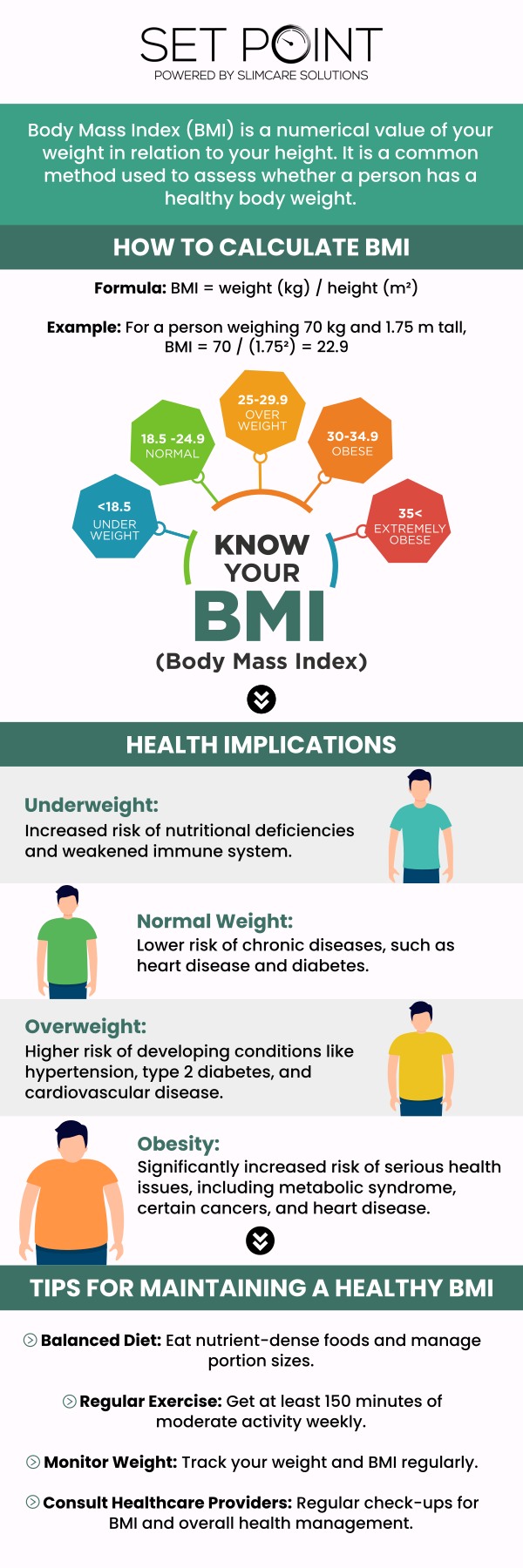
Table of Contents:
What is the normal BMI range for men?
Does the normal BMI range change based on a man’s age?
Why is maintaining a normal BMI important for men’s health?
How often should men monitor their BMI?
Personalized Weight Management Support Based on Men’s BMI Goals at Set Point Medical Weight Loss Clinic
For most adult men, a BMI between 18.5 and 24.9 is considered within the healthy or normal range. Standard adult BMI categories are based on weight relative to height and apply to adults aged 20 and older, regardless of sex.
The general BMI categories are:
• Below 18.5: Underweight
• 18.5 to 24.9: Healthy weight
• 25.0 to 29.9: Overweight
• 30.0 or higher: Obesity
BMI is a screening measurement rather than a diagnosis. It does not distinguish between muscle and body fat or account for waist circumference, body composition, medical history, and metabolic health. At Set Point Medical Weight Loss Clinic, our team looks at BMI alongside other relevant health factors when helping men identify realistic weight ranges and develop personalized weight management goals.
The standard healthy BMI range generally does not change based on a man’s age. For adult men age 20 and older, a BMI between 18.5 and 24.9 is classified as a healthy weight. A BMI below 18.5 is considered underweight, 25.0 to 29.9 is classified as overweight, and 30.0 or higher falls within the obesity category.
However, age can affect how accurately BMI reflects a man’s health. As men grow older, they may lose muscle mass, experience changes in bone density, or carry more abdominal fat. An older man may therefore have a BMI within the normal range while still having low muscle mass or other health risks. BMI should be considered alongside waist circumference, body composition, strength, mobility, metabolic health, and medical history.
At Set Point Medical Weight Loss Clinic, our team considers more than BMI alone. We consider age-related changes, lifestyle habits, body composition, medical needs, and personal wellness goals to create a realistic and individualized weight management plan.
Maintaining a normal BMI can support men’s overall health by helping reduce risks commonly associated with being underweight, overweight, or obese. For most adults, a BMI between 18.5 and 24.9 is categorized as a healthy weight, although BMI should be considered alongside body composition, waist circumference, and other health measurements.
Maintaining a healthy BMI may help men:
• Support heart health: A healthier weight may reduce strain on the heart and lower the risk of high blood pressure, heart disease, and stroke.
• Promote balanced blood sugar: Healthy weight management may lower the likelihood of insulin resistance and type 2 diabetes.
• Protect joint health: Maintaining an appropriate weight can reduce excess pressure on the knees, hips, back, and other weight-bearing joints.
• Support healthy cholesterol levels: Weight management can contribute to healthier cholesterol and triglyceride levels.
• Reduce certain cancer risks: Excess weight is associated with an increased risk of several cancers, including colon, rectal, and prostate cancers in men.
• Improve mobility and physical function: A healthy weight can make everyday movement, exercise, and recreational activities more comfortable.
• Support better sleep: Healthy weight management may reduce factors associated with sleep problems, including obstructive sleep apnea.
• Promote liver and kidney health: Maintaining a healthier weight may reduce the risk of fatty liver disease and weight-related kidney concerns.
• Improve energy and overall wellness: Balanced nutrition, regular activity, and healthy weight management can support stamina and daily well-being.
BMI is a screening tool and does not distinguish between muscle and body fat. At Set Point Medical Weight Loss Clinic, our team considers BMI together with other relevant health measurements, medical history, lifestyle habits, and individual goals to help men work toward a realistic and sustainable healthy weight.
Men should monitor their BMI periodically rather than checking it every day. There is no single required schedule for all adults, but reviewing BMI during routine health visits can help identify gradual weight changes and potential health risks. The CDC notes that tracking BMI over time can be useful for detecting weight gain or loss.
Men who are actively working toward weight-management goals can review their BMI during scheduled follow-up visits or according to the monitoring plan recommended by their healthcare team. It may also be appropriate to recalculate BMI after a meaningful change in weight, lifestyle, health status, or treatment plan. Because height usually remains stable in adulthood, frequent BMI calculations may not provide additional value and can be affected by normal short-term weight fluctuations.
BMI should be reviewed together with waist circumference, body composition, blood pressure, metabolic health, and medical history because it does not directly distinguish body fat from muscle. At Set Point Medical Weight Loss Clinic, our team can help determine an appropriate follow-up schedule based on each man’s health needs and weight goals.
At Set Point Medical Weight Loss Clinic, our team provides personalized weight management support based on each man’s BMI, body composition, medical history, lifestyle, and individual health goals. Rather than focusing only on a number on the scale, we consider factors that may include waist circumference, body composition, eating habits, activity level, sleep, and potential barriers to progress. This broader approach helps us develop a practical plan tailored to each patient’s needs.
Our team provides ongoing guidance, progress monitoring, and adjustments to help men work toward healthier and more sustainable BMI goals. Personalized recommendations may focus on balanced nutrition, physical activity, behavioral changes, and long-term weight maintenance. Set Point Medical Weight Loss Clinic is committed to helping patients support goals related to energy, mobility, confidence, and overall well-being through structured and individualized care.
For more information, contact us or schedule an appointment. We are conveniently located at 1380 Lead Hill Blvd Ste 108, Roseville, CA 95661. We serve patients from Folsom CA, Roseville CA, El Dorado Hills CA, Citrus Heights CA, Rocklin CA, Fair Oaks CA, Granite Bay CA, Rancho Cordova CA, Loomis CA, and surrounding areas.

Check Out Our 5 Star Reviews



Additional Services You May Need
▸ Tirzepatide
▸ Weight Loss
▸ Semaglutide GLP-1
▸ Red Light Therapy
▸ Hormone Replacement Therapy
▸ Testosterone Replacement Therapy
▸ Vitamin B12
▸ Glutathione
▸ Lipotropic (MIC)
▸ Vitamin C
▸ Vitamin D3
▸ Peptide
▸ Custom Lab Panels
▸ Emsella
▸ Emface
▸ Exomind




 Send Text
 How May I Help You?